
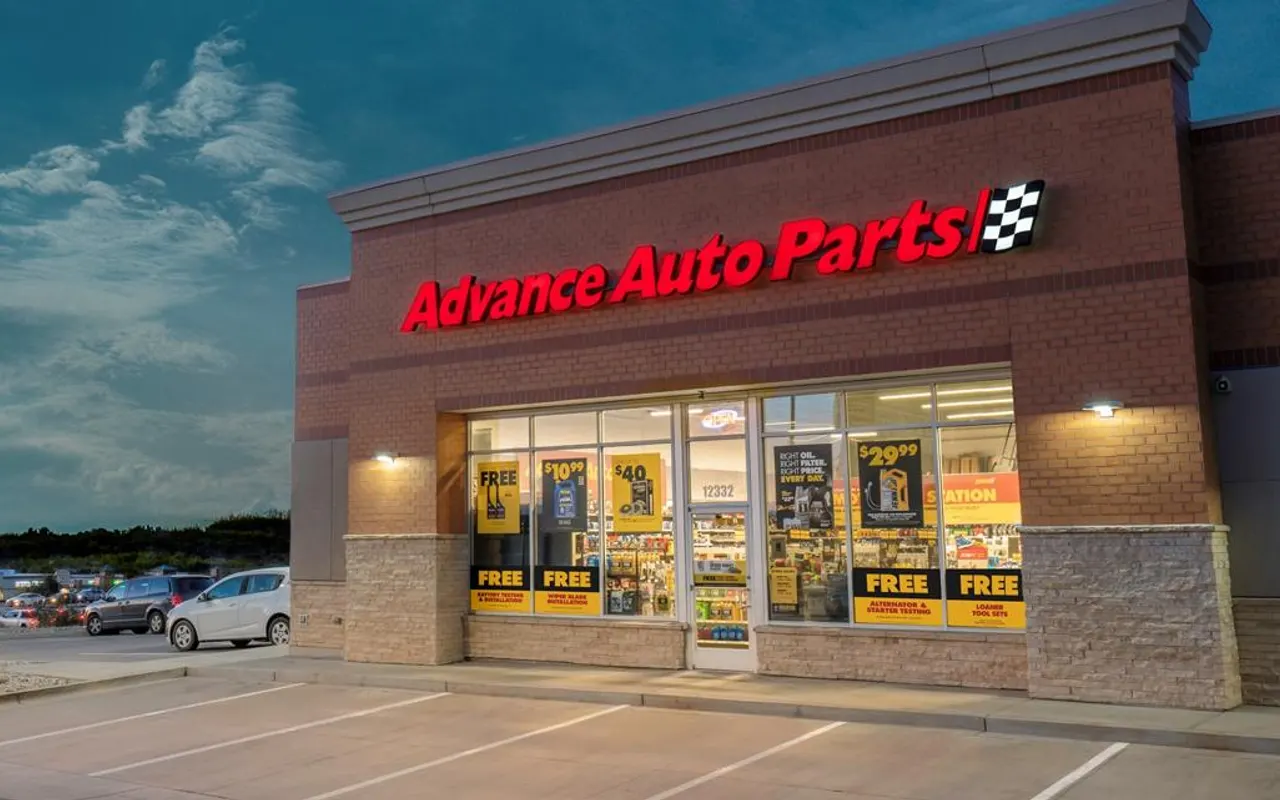
Advance Auto Parts NNN Properties for Sale
Advance Auto Parts is the automotive sector's distressed-credit trade: the weakest of the three national parts chains, mid-restructuring, priced accordingly — and secured by the same fungible real estate and aging-fleet demand that make its rivals fortress tenants. Bought selectively at wide caps, survivor stores offer the sector's only real yield; bought carelessly, they're a ratings downgrade with a roof.
Quick Facts
- Typical cap range
- 6.25–7.75%
- Lease type
- NN/NNN — verify per lease
- Typical term
- 10 yr
- Credit
- Corporate — below investment grade (Moody's Ba3 / S&P BB, both negative outlook, as of Q3 2026)
- Guarantee
- Advance Stores Company / Advance Auto Parts, Inc.
Advance Auto Parts Listings
Listing information is deemed reliable but not guaranteed — pricing, cap rates, and lease terms are subject to change, prior sale, or withdrawal without notice.
Get off-market Advance Auto Parts deals
Lease structure
The fleet's paper reflects growth-by-acquisition history (Parts America, Autopart International, Carquest conversions): 10-year terms are typical, structures split between NN and NNN, and escalations vary from flat to 5% mid-term bumps. Post-2024 lease extensions — the company renegotiated hundreds during restructuring — run shorter with modernized language. Buildings match the sector template, with a subset of larger hub stores supporting the commercial delivery network.
Credit and guarantee
Advance Auto Parts, Inc. (~$9B revenue post-Worldpac) guarantees through its operating entities; ratings sit below investment grade — Moody's Ba3 and S&P BB, both on negative outlook, as of Q3 2026 — and this credit moves, so re-confirm at contract. The turnaround thesis: shed wholesale, close weak stores, concentrate on Pro commercial share in its strong mid-Atlantic and Southeast markets, rebuild margins from the worst in the sector toward peer levels. Execution has been uneven; store-level selection matters more here than for any other national parts tenant.
What drives cap rates
Credit headlines set the base spread — 100–150 basis points over AutoZone paper on similar terms. From there: survivor pedigree (through the 2024–25 closures), lease extension recency, term remaining, and structure. Real estate variables reclaim importance at the wide end: a hard-corner store in a dense repair-shop corridor at $9 rent is a defensible hold at 7.5% regardless of parent drama, while a soft-corridor store at $13 needs the turnaround to succeed. Geographic footprint concentrates in the East — mid-Atlantic strongholds price tightest.
Buyer criteria and red flags
Underwrite three scenarios explicitly: performing lease, early exit, and renewal-at-market — the wide cap only compensates if all three pencil. Demand the store's closure-round history, any extension documentation, and guarantor entity confirmation. Red flags: stores in markets where Advance's density is thinnest (network-logic orphans), pre-2000 buildings without documented capex, rent above $13 per foot, and short terms marketed on "they just extended nearby stores" logic. The honest frame: this is credit work priced like real estate work — do both and the yield is real.
How Advance compares
AutoZone and O'Reilly are the same box with bulletproof parents at 100+ fewer basis points — the default choice for passive buyers. Advance is for the yield-focused investor comfortable reading restructuring progress like a credit analyst. The cross-sector analogue is Family Dollar: both are wide-cap survivors of their categories' consolidation, both reward store-level selection, and both punish buyers who mistake a category thesis for a tenant guarantee.
Advance Auto Parts NNN FAQs
How bad is the Advance Auto Parts situation, really?
Serious but specific. The company closed 700+ stores in 2024–25, sold its Worldpac wholesale unit for $1.5B to fund the turnaround, and watched ratings slip below investment grade. What it is not: a liquidation. Roughly 4,000 stores remain in a category whose demand grows with fleet age. Your underwriting question is whether your store made the keeper list — the closures published where the network is thinning.
Why buy Advance paper at all with two stronger rivals next door?
Price. Survivor stores trade 100–150 basis points wide of AutoZone and O'Reilly for buildings and corridors that often match — the market charges for the parent's stumbles, not the location's economics. If the turnaround stabilizes credit, today's 7.25% buyer owns tomorrow's 6.25% pricing. If it doesn't, the parts-store box re-leases better than almost any comparable format, frequently to the rivals themselves.
What tells me a specific Advance store is a keeper?
Its history through the culls and its role in the new network. The company reorganized around market density and its commercial 'Pro' business — stores that survived while neighbors closed inherited their accounts. Check closure maps, ask for the store's tenure and any remodel or signage reinvestment since 2024, and treat a recently extended lease as the strongest signal available: the company is choosing where to commit.
What happens to my building if Advance leaves anyway?
You own the most standardized backfill box in the sector: 6,500–7,500 square feet, masonry, ample parking — and your likeliest replacement tenants are literally AutoZone and O'Reilly, both still growing store counts, plus discount retail and medical users. Market rents run $7–11 per foot against Advance's typical $9–13. Basis discipline going in converts that scenario from a loss to an inconvenience.
Keep Exploring
Browse
Sector
Related Tenants
States with Inventory
Run the Numbers
Buying a Advance Auto Parts? Get every matching deal — on and off market.
Free buyer representation. No obligation. Reply within 24 hours.