
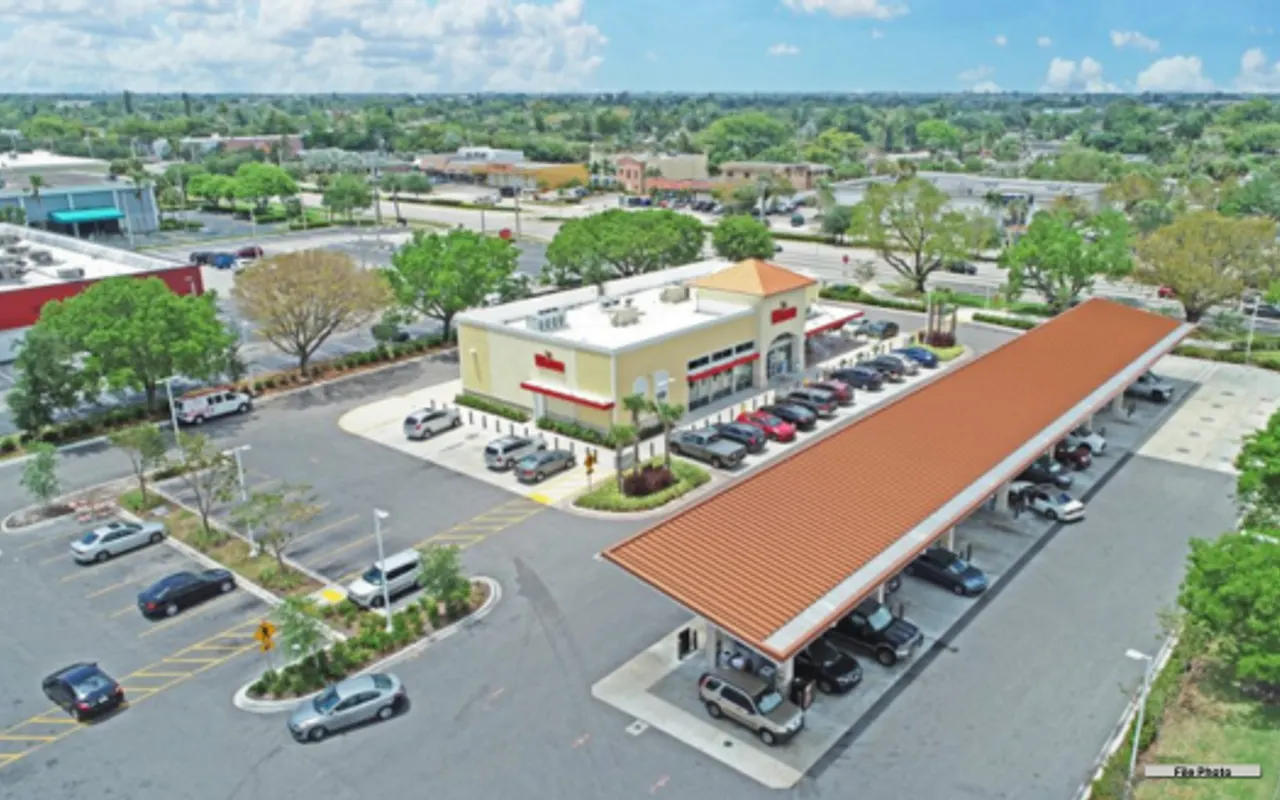
Wawa NNN Properties for Sale
Wawa is the c-store sector's premium credit: a private, employee-owned chain whose stores outsell nearly everything else in American convenience retail, expanding down the Eastern Seaboard on 20-year corporate leases that trade like trophy assets. Inventory is perpetually scarcer than buyer demand — a Wawa listing in a 1031 window tends to resolve in days.
Quick Facts
- Typical cap range
- 4.75–5.50%
- Lease type
- Absolute NNN / ground lease
- Typical term
- 20 yr
- Credit
- Corporate — private; unrated, conservatively financed
- Guarantee
- Wawa, Inc.
Wawa Listings
Listing information is deemed reliable but not guaranteed — pricing, cap rates, and lease terms are subject to change, prior sale, or withdrawal without notice.
Get off-market Wawa deals
Lease structure
New-build Wawa deals — the bulk of tradeable supply — carry 20-year absolute-net base terms with multiple 5-year options and escalations around 10% every five years (some paper runs 1.5–2% annually; confirm per deal). Ground-lease structures appear where landowners kept dirt through development. Tenant obligations are total: fuel systems, canopy, building, lot. The documents are standardized corporate forms with little negotiation variance, which simplifies diligence to verifying conformity rather than hunting surprises.
Credit and guarantee
Wawa, Inc. signs directly — no franchisees exist in the system. The company's profile reads investment-grade in everything but the rating: about $17B in revenue, 1,100+ stores each averaging volumes that double or triple typical c-store performance, ESOP-and-family ownership, and a five-decade record without leverage drama. The absence of public financials is the underwriting cost; on institutional-size deals, sellers can often facilitate NDA financial review. The market's verdict is unambiguous — it prices Wawa above rated national chains.
What drives cap rates
Market maturity leads: legacy mid-Atlantic stores (rarely traded, proven volumes) versus Florida growth-market builds versus first-store-in-town frontier deals in the newest states. Fresh 20-year term keeps everything tight; deals reaching year 10+ of their base term start pricing normally. Fuel versus non-fuel matters less than for other chains — nearly all new prototypes include fuel — so the differentiators are corner quality, escalation schedule, and rent level against the store's (usually undisclosed but estimable) volume.
Buyer criteria and red flags
The core discipline is refusing to let scarcity set your price. Wawa deals attract auction dynamics; underwrite the corner as if the tenant were anonymous — signal access, trade-area growth, competing c-store development within three miles (QuikTrip, Sheetz, Buc-ee's, and 7-Eleven all contest Wawa's new markets). Confirm environmental baseline documentation on fuel sites even with tenant-owned tanks. Red flags are few but pointed: above-market rent on frontier stores, missing escalations, and any deviation from the standard absolute-net form — deviations mean someone negotiated, and it wasn't for your benefit.
How Wawa compares
7-Eleven offers rated corporate paper and triple the deal flow at 50–100 basis points more yield — the liquid alternative. Circle K trades wider still with more structural variety. The aspirational comp is Chick-fil-A: both are private, category-dominant operators whose scarcity pricing reflects unit economics no competitor matches. Wawa is what happens when that profile comes with fuel pumps and a 20-year lease.
Wawa NNN FAQs
Why does Wawa command the tightest caps in the c-store sector?
Sales density with a moat. A typical new Wawa clears $10M+ across fuel and inside sales on a 5,500+ square foot store whose made-to-order hoagie program functions as a QSR business bolted to a fuel canopy. Twenty-year corporate leases on brand-new construction complete the package. Buyers routinely accept caps below 5.5% — pricing normally reserved for Chick-fil-A — because the store-level economics genuinely resemble it.
Wawa is private and unrated — what supports the credit?
A 60-year operating record (the current format dates to 1964), 1,100+ stores concentrated in nine states plus D.C., employee-and-family ownership with famously conservative leverage, and per-store revenue that leads the industry. No rating exists because no public debt exists. Diligence substitutes: audited-financials review under NDA on larger deals, plus the observable evidence of a chain that has never had a distress event. Confirm financial condition per transaction, as with any private credit.
Where is Wawa inventory actually available?
Follow the expansion map. Legacy Pennsylvania–New Jersey–Delaware stores rarely trade; the deal flow comes from developer exits in Florida — where Wawa has opened 300+ stores since 2012 — and the newer push through Virginia, the Carolinas, Georgia, and into Ohio, Kentucky, Tennessee, Indiana and Alabama. New-market builds hit the NNN market as forward sales or completed 20-year leases, typically $6–9M at caps flirting with 5%.
What should I verify on a Wawa new-construction deal?
Rent reasonableness and corner fundamentals. New-market Wawa rents often run $300–450K — numbers only Wawa-level volumes support, so your downside scenario is a repricing event, not a smooth re-tenant. Check the site: signalized full-movement access, 1.75+ acres, co-location with major retail gravity. Then confirm the lease's absolute-net and tank-obligation language matches the standard corporate form, and that you're buying from the developer at a spread rather than paying retail twice.
Keep Exploring
Browse
Sector
States with Inventory
Run the Numbers
Latest Insights
Buying a Wawa? Get every matching deal — on and off market.
Free buyer representation. No obligation. Reply within 24 hours.