

Virginia NNN Properties for Sale
Virginia is the mid-Atlantic's two-engine market: Northern Virginia's federal-tech wealth pricing at DC-premium caps, and the Hampton Roads–Richmond corridor delivering military-and-capital stability at friendlier yields. Add the Wawa/7-Eleven expansion battleground and the state supplies fresh convenience paper most Northeastern markets can't.
Market Facts
- State income tax
- Graduated to 5.75%
- Population trend
- Growing; NoVa and coastal-led
- Cap spread vs national
- Inside national averages in NoVa corridors
- Top metros
- NORTHERN VIRGINIA · VIRGINIA BEACH–NORFOLK · RICHMOND
Virginia Listings
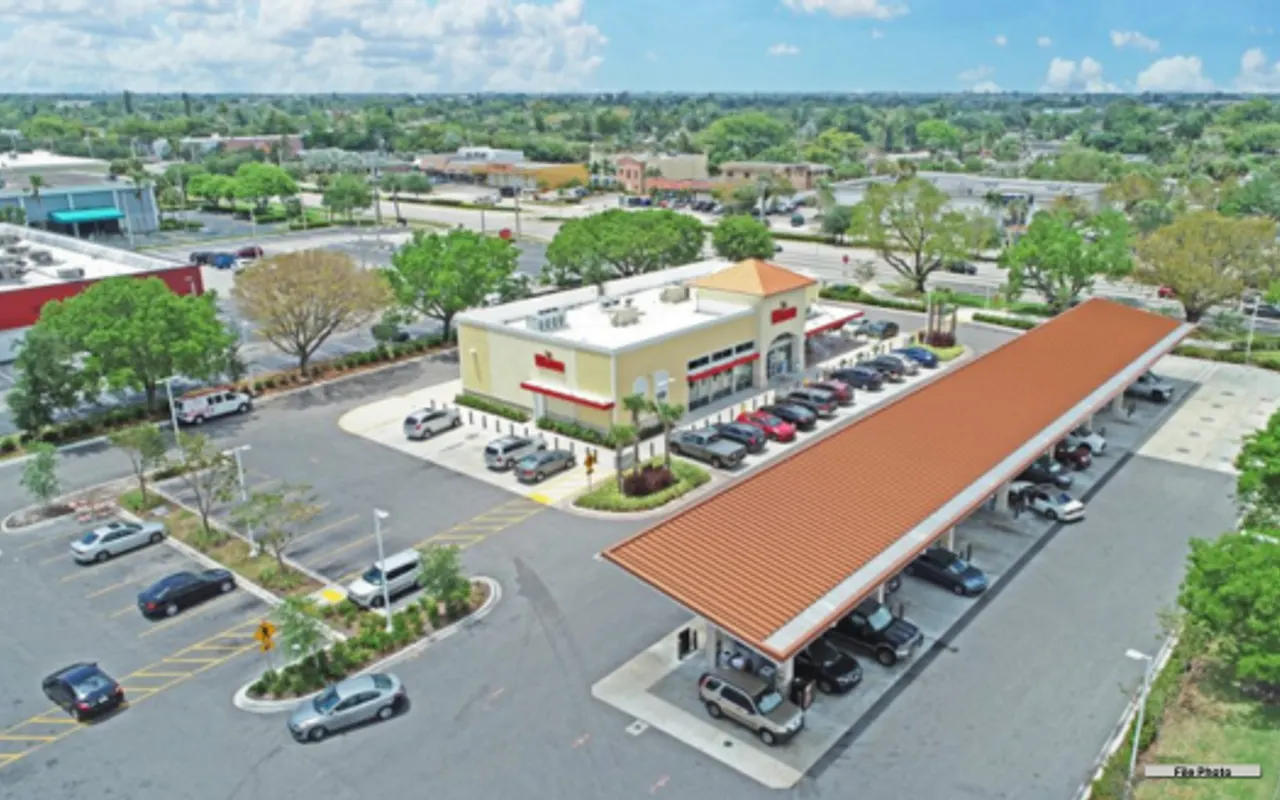
Listing information is deemed reliable but not guaranteed — pricing, cap rates, and lease terms are subject to change, prior sale, or withdrawal without notice.
Get off-market Virginia deals
Why Virginia for NNN
The demand base is federally underwritten: defense spending, government contracting, and the world's largest concentration of data centers (Loudoun County routes most of the internet) fund household incomes that rank among national leaders in the north, while shipbuilding and naval payrolls anchor the coast. The state balances that with Southern-style transaction friendliness — moderate taxes, practical regulation, and a development pipeline (especially c-store and QSR) refreshing inventory along every growth corridor from Fredericksburg to Suffolk.
Top metros
Northern Virginia is the flagship: Route 7, Route 28, and Prince William Parkway corridors carry pads priced for their protected positions and elite demographics. Richmond — state capital, banking center, and logistics midpoint on I-95 — has become the value-growth blend, with Short Pump and Midlothian corridors leading. Hampton Roads trades on military stability across seven cities' arterials. Roanoke and the I-81 valley towns supply rural-adjacent yield, and Charlottesville adds university-market scarcity pricing at boutique volume.
Tax and 1031 notes
Graduated income tax topping at 5.75% on nonresident Virginia rent; 2.5% nonresident-seller withholding with routine 1031 exemption paperwork. No estate tax; property taxes moderate with locally variable rates (NoVa's commercial add-ons for transportation districts are worth confirming in pass-through math). BPOL (local business license) taxes rarely touch passive single-asset landlords but confirm per jurisdiction with your CPA. The state's proximity to DC capital keeps exit liquidity strong for quality corridors.
Deal flow and buyer's notes
Virginia's two engines demand different playbooks. NoVa: institutional competition, data-center-adjacent land math, and sellers who price like the Beltway — win with speed and certainty. Hampton Roads and Richmond: steadier pace, real negotiation, and payroll bases (Navy, port, state government) that underwrite themselves. The Wawa/7-Eleven expansion overlap makes c-store paper unusually deep here; cross-shop vintages before paying new-build premiums. Confirm transportation-district surcharges in NoVa pass-through models, and treat Richmond's Short Pump-to-Midlothian arc as the state's best growth-per-dollar corridor. Military-adjacent retail deserves one extra screen: diversified corridor demand beats gate-dependent monoculture whenever fleet realignments make headlines.
Active tenants here
Wawa and 7-Eleven contest every growth corridor — Virginia supplies both chains' paper in depth. Chick-fil-A and McDonald's anchor the QSR tier from NoVa to the Beach, CVS holds dense mid-Atlantic corners, Advance Auto Parts — Roanoke-born — keeps home-state density, and Dollar General grids the Southside and Valley small towns.
Virginia NNN FAQs
What differentiates Northern Virginia NNN from the rest of the state?
Federal-economy wealth. Fairfax, Loudoun, and Prince William counties post some of America's highest household incomes on defense, tech, and government payrolls — Loudoun's data-center corridor alone generates tax base most states would envy. NNN pricing runs DC-metro tight (low-to-mid 5s on corporate QSR), and entitlement friction protects existing pads. It's the mid-Atlantic's premium single-tenant market.
Is the military presence a real underwriting factor in Hampton Roads?
The region's anchor tenant is the Pentagon: Norfolk hosts the world's largest naval base, and the Virginia Beach–Norfolk–Newport News metro's 1.8M people ride defense payrolls that don't track recessions. Retail corridors serving base traffic (Military Highway, Virginia Beach Boulevard) support national tenants with unusual stability. Fleet realignments are the tail risk — diversified corridors beat gate-adjacent monocultures.
Where do Wawa and 7-Eleven fit in Virginia?
Virginia is their overlap battleground. 7-Eleven has run dense here for decades (Virginia was long among its strongest states), while Wawa's southward march made Richmond, Hampton Roads, and NoVa growth corridors its mid-2010s proving ground — both now supply steady NNN paper. The competition itself is diligence-relevant: a legacy 7-Eleven across from a new Wawa superstore is a different hold than one without the neighbor.
How does Virginia treat 1031 exchanges and nonresident owners?
Cleanly. Nonresident rent bears the state's modest graduated rates (top 5.75%), sales trigger 2.5% nonresident withholding with standard exchange exemptions, and no estate tax applies. Property taxes are moderate and locally administered — car-tax headlines aside, real estate assessment practice is sober. Closing infrastructure is attorney-and-title hybrid, efficient in every metro.
Keep Exploring
Browse
Neighboring States
Active Tenants Here
Run the Numbers
Buying in Virginia? Tell us your criteria — we'll send matching deals.
Free buyer representation. No obligation. Reply within 24 hours.