
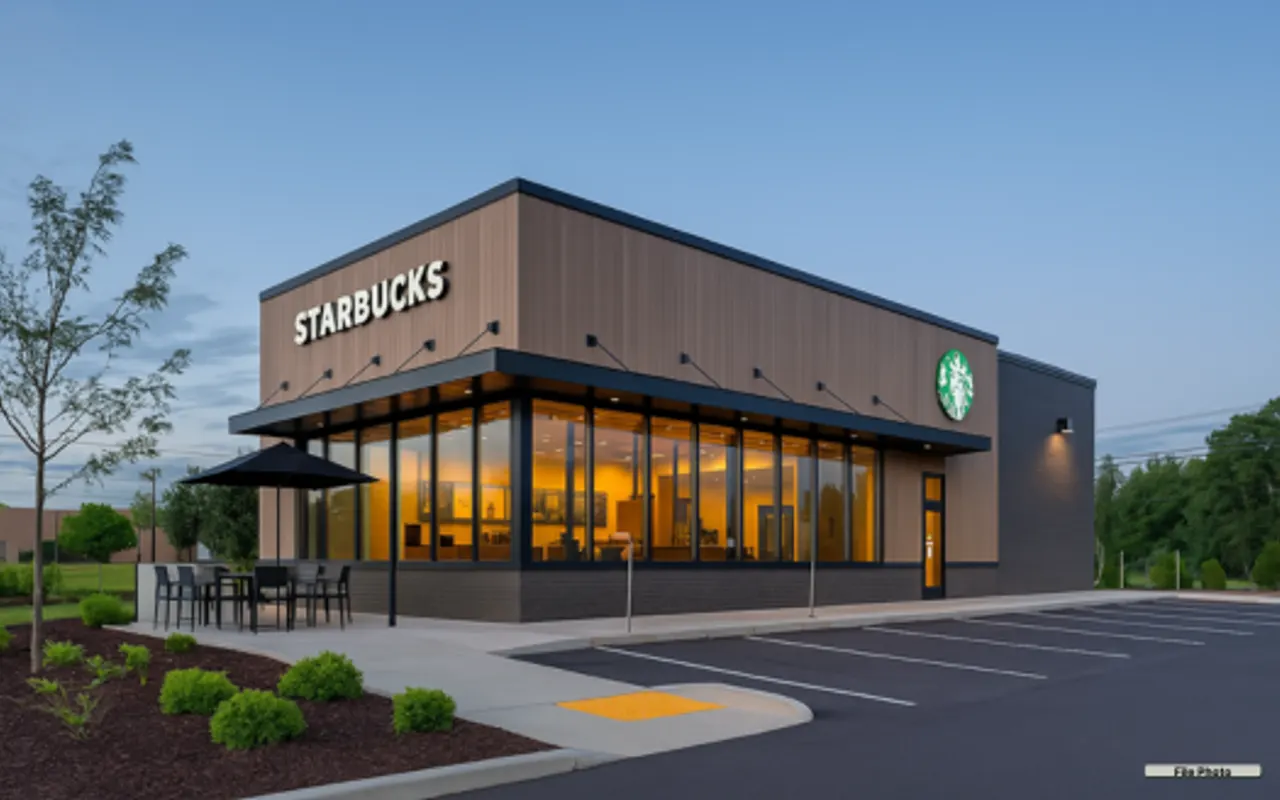
Starbucks NNN Properties for Sale
Starbucks brings something rare to the QSR aisle of net lease: a 100% corporate-operated U.S. fleet. No franchisee tiers, no operator financials to chase — roughly 17,000 domestic stores all backed by the same investment-grade balance sheet. The trade-off arrives in lease structure: shorter terms and more landlord obligations than the burger-and-chicken ground leases it competes against for 1031 money.
Quick Facts
- Typical cap range
- 5.00–6.00%
- Lease type
- NNN (landlord roof/structure on many)
- Typical term
- 10 yr
- Credit
- Corporate — investment grade (Moody's Baa1 / S&P BBB+, as of Q3 2026)
- Guarantee
- Starbucks Corporation
Starbucks Listings
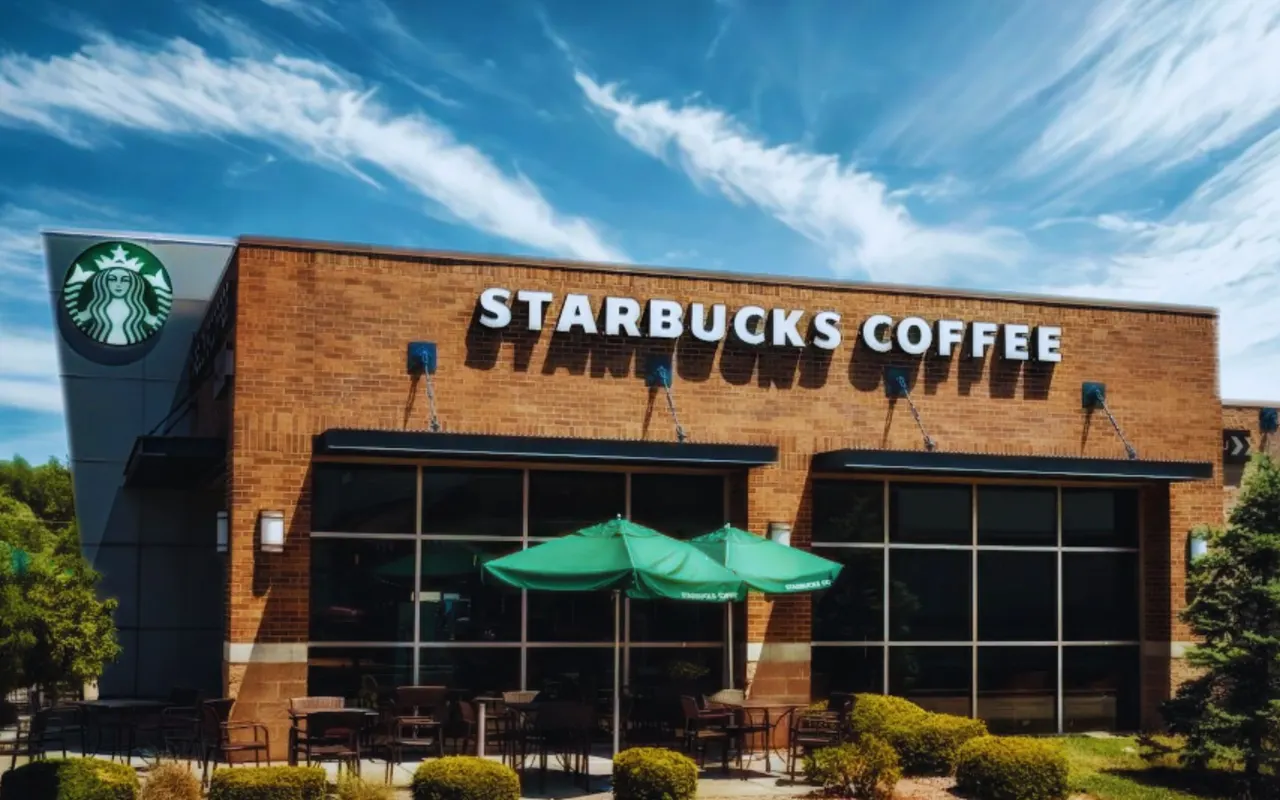
Listing information is deemed reliable but not guaranteed — pricing, cap rates, and lease terms are subject to change, prior sale, or withdrawal without notice.
Get off-market Starbucks deals
Lease structure
The standard package is a 10-year initial term with two or three 5-year options and a 10% bump every five years. Absolute-net language is the exception; most leases assign roof and structure to the landlord, cap certain pass-throughs, and reflect the negotiating leverage of a tenant that knows its sign adds value to any corner. New drive-thru prototypes — 2,000–2,500 square feet, dual order points, walk-up windows — anchor the current development pipeline, and developer exits on those builds supply most of the fresh 10-year paper hitting the market.
Credit and guarantee
Starbucks Corporation signs directly: $36B+ in annual revenue, investment-grade ratings — Moody's Baa1 (negative outlook), S&P BBB+, as of Q3 2026 — and coffee's pricing power demonstrated through every economic cycle since 1992. The 2025 restructuring under new leadership traded store count for store quality — a landlord-relevant strategy shift, since capital is now concentrating in exactly the drive-thru formats that dominate the for-sale market.
What drives cap rates
Format first: freestanding drive-thru pads in the low-to-mid 5s, drive-thru endcaps a quarter-point wider, café-only inline space wider still and increasingly hard to exit. Then term math — fresh 10-year deals versus 4-year rumps can span a full point. Then rent reality: Starbucks pays premium rents ($38–55 per foot is common), which works while sales exceed $1.5M but leaves little re-lease cushion; the division of rent by realistic replacement-tenant rent is the most important arithmetic in the deal. Escalations and roof allocation finish the model.
Buyer criteria and red flags
Target drive-thru formats, confirm the escalation schedule survived negotiation (flat 10-year terms exist), and price landlord roof/structure honestly. Red flags: cafés in trade areas where the chain has been consolidating, rent above $55 per foot without exceptional volume evidence, and short-term deals marketed on renewal hope where the store lacks a lane — the exact profile the closure program targeted. A quick check of the store's operating hours against nearby competitors often reveals more than the OM does.
How Starbucks compares
Against Dutch Bros, you're choosing between the incumbent's balance sheet and the challenger's growth (Dutch Bros deals carry longer 15-year terms but a younger credit). Dunkin' offers the franchise model Starbucks lacks — wider caps, operator-dependent underwriting. And Chipotle, its frequent co-developer on new pads, shows what the same corporate-credit logic prices like with 15-year terms attached. Starbucks remains the liquidity king: more buyers know this tenant than any other name in net lease.
Starbucks NNN FAQs
Every Starbucks lease is corporate — why do cap rates vary so much?
Because the company doesn't franchise in the U.S., credit is constant, so pricing swings on everything else: term (10-year deals dominate, and a 3-year rump trades very differently), drive-thru presence, roof-and-structure allocation, and rent level. A new drive-thru prototype at $40 per foot in a growth suburb and a 2008-vintage café at $55 per foot in a shifting downtown are both 'corporate Starbucks' — and 100+ basis points apart.
Are Starbucks leases truly triple net?
Read the maintenance article carefully. Many Starbucks leases keep roof and structure with the landlord — 'NNN' in the flyer, 'NN' in practice. The company negotiates hard on this and on caps for CAM. It's not disqualifying; a roof on a 2,200-foot building is a manageable known cost. But your net yield is the cap rate minus reserves, and honest underwriting prices that gap at 25–50 basis points.
How does the 10-year term affect resale?
It compresses your hold math. Buy at year zero with 10 years of term, hold five, and you're selling a 5-year lease — a product 1031 buyers finance reluctantly and lenders price defensively. The renewal signal that rescues the exit: strong store sales, a recent drive-thru retrofit, and the company's own reinvestment in the site. Plan the exit before you buy, not at year five.
What did Starbucks' store-closure programs mean for landlords?
The 2025 'Back to Starbucks' restructuring closed several hundred underperforming North American stores — overwhelmingly cafés without drive-thrus in oversaturated urban pockets. Leases kept paying until resolved, but the episode drew the underwriting line clearly: freestanding drive-thru pads in suburban trade areas are the keep-and-grow fleet; inline café space is where closure risk lives. Buy the former.
Is a Starbucks drive-thru pad better than an endcap with a lane?
Usually, and the market prices it that way. The freestanding pad gives you fee control, undiluted signage, and the residual value of a purpose-built lane on your own parcel — worth roughly 25–50 basis points versus an endcap. The endcap costs less in absolute dollars and can outperform when it anchors a dominant grocery center. Between the two at similar caps, take the pad.
Keep Exploring
Browse
States with Inventory
Run the Numbers
Latest Insights
Buying a Starbucks? Get every matching deal — on and off market.
Free buyer representation. No obligation. Reply within 24 hours.