
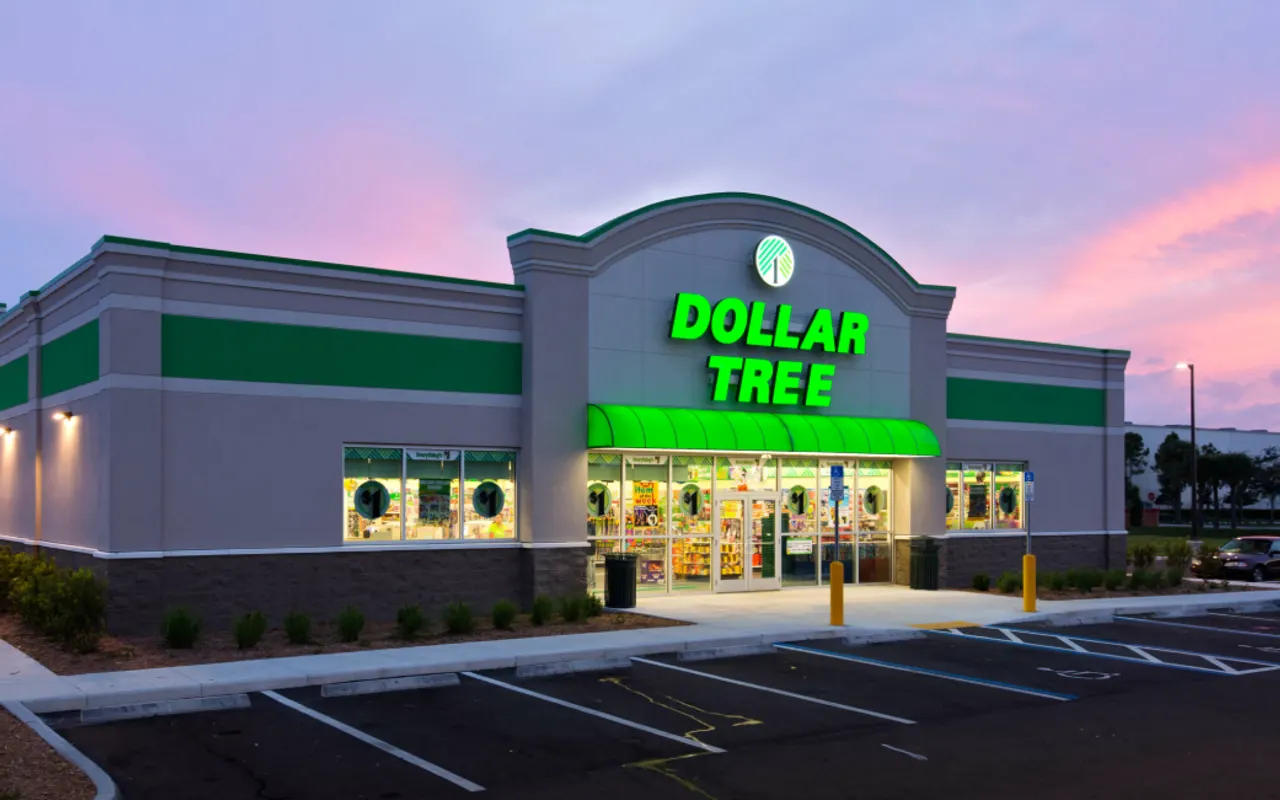
Dollar Tree NNN Properties for Sale
Dollar Tree is the suburban counterweight in the dollar-store trade: BBB corporate credit expressed through strip-corridor real estate rather than rural monopolies. Freestanding single-tenant deals are scarcer than its 8,000-store count suggests — the chain prefers inline space — which keeps the fee-simple offerings that do surface bid by both net lease buyers and strip-center investors who want the box back someday.
Quick Facts
- Typical cap range
- 6.25–7.50%
- Lease type
- NNN (landlord roof/structure common)
- Typical term
- 10 yr
- Credit
- Corporate — investment grade: Baa2 / BBB (Moody's / S&P, Q3 2026); not shared by Family Dollar
- Guarantee
- Dollar Tree, Inc.
Dollar Tree Listings
Listing information is deemed reliable but not guaranteed — pricing, cap rates, and lease terms are subject to change, prior sale, or withdrawal without notice.
Get off-market Dollar Tree deals
Lease structure
Freestanding paper typically runs 10-year initial terms with two to four 5-year options; escalations sit in the options at 10% steps, base terms usually flat. NNN with landlord roof-and-structure is the norm — true absolute-net Tree deals are the exception and price accordingly. Buildings range from the 8,000–10,000 square foot purpose-built box to a long tail of conversions (banks, drugstores, groceries), which makes physical diligence less standardized than for prototype-driven tenants: each building is its own story.
Credit and guarantee
Dollar Tree, Inc.: rated Baa2 (Moody's) / BBB (S&P) as of Q3 2026 — a rating that does not extend to the divested Family Dollar — with $17B+ revenue post-divestiture, and the multi-price strategy that re-energized comps after 2021. The 2025 Family Dollar sale focused the company on its stronger banner and its distinctive moat — a true variety-store format with no direct national competitor at its price architecture. Guarantees are corporate across the fleet; no franchise layer exists.
What drives cap rates
Term remaining leads (10-year paper ages into 5-year paper quickly), then structure (roof allocation), then the real estate's second-life quality: corridor strength, co-tenancy gravity, parcel geometry, and conversion cost for the next tenant. Store performance data is rarely disclosed, so trade-area proxies — grocery anchor health, daytime population, competing dollar banners — carry the analysis. Sunbelt suburban deals with fresh terms set the tight end; aging conversions in flat markets set the wide end.
Buyer criteria and red flags
Underwrite the building as if vacant: measure market rent against contract rent, price the roof by age not by lease label, and confirm the parcel stands alone with its own access and parking rights (converted outparcels sometimes lean on reciprocal easements). Red flags: 1980s conversions with original systems, centers losing their grocery anchor, contract rents above $12 per foot in markets where re-lease comps say $8, and short remaining terms marketed on renewal faith without store-level evidence. The good news: when a Tree box fails, the real estate usually finds a next act — your basis determines whether that act profits you.
How Dollar Tree compares
Dollar General offers longer terms and absolute-net structure on weaker dirt; Tree offers better dirt on shorter paper — a genuine portfolio-construction choice rather than a rivalry. Family Dollar, now separately owned, trades wider with more variance and rewards store-level selectivity. The sleeper comp is Walgreens: similar yields, similar corner quality — and Tree conversions of former drugstores mean the two literally trade buildings. Between them, Tree's simpler credit story wins for buyers who'd rather not model termination options.
Dollar Tree NNN FAQs
How is Dollar Tree different from Dollar General as a landlord bet?
Geography and term. Dollar Tree runs suburban — strip centers, shadow-anchored pads, retail corridors with real co-tenancy — where Dollar General owns rural monopoly corners. Tree's freestanding leases run shorter (10 years versus DG's 15) with landlord roof-and-structure more common. You trade term length for meaningfully better re-lease markets: a vacant Tree box in a grocery corridor has suitors a rural DG box never will.
Did the multi-price rollout change store economics?
Materially. Breaking the dollar barrier ($1.25 base in 2021, then $3–7 price points) lifted average tickets and gave stores inflation room the old model lacked — comps responded through the mid-2020s. For landlords the relevant translation: healthier store P&Ls under your roof and corporate reinvestment in the surviving fleet, especially after the company shed the Family Dollar drag in its 2025 sale.
What does the Family Dollar divestiture mean for Dollar Tree paper?
Cleaner credit. The 2025 sale to private-equity buyers removed a chronically underperforming 7,000-store banner and its closure headlines from Dollar Tree, Inc.'s books. Your Dollar Tree lease is now backed by a focused single-banner retailer with BBB-range ratings. Older combined-era leases keep whatever entity signed them — one more reason the signature page outranks the press release in diligence.
Most Dollar Tree deals I see are inline space — should I buy those?
As strip-center investments, maybe; as NNN deals, know what you're holding. The chain's 8,000+ stores skew heavily toward leased inline space that trades inside multi-tenant centers, not as single-tenant paper. The freestanding fee-simple offering — usually a converted bank, former Walgreens, or purpose-built box — is the scarcer product this page addresses. Its pricing runs 50–75 basis points wide of DG for the shorter term, netting out the better real estate.
Keep Exploring
Browse
Sector
States with Inventory
Run the Numbers
Buying a Dollar Tree? Get every matching deal — on and off market.
Free buyer representation. No obligation. Reply within 24 hours.